Speakers
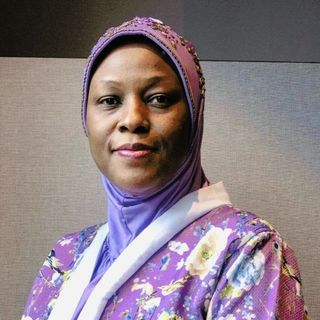
Dr Faatihah Niyi-Odumosu

Alice Chilver
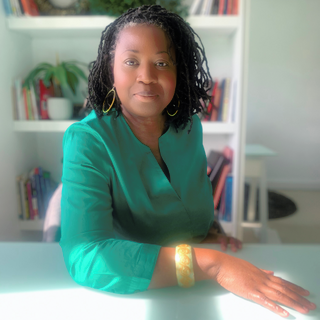
Workshop
The 100 Black Women Professors NOW programme was launched in 2021/22 to proactively promote equity of opportunity, increase diversity in the academic pipeline, break down barriers to academic progression and eliminate bias and racism. When it started, there were only 25 Black women professors in the UK compared to 12,500 white men. Since the programme began, the number of Black women professors has more than doubled with the recent statistics being 90 black female professors.
Faatihah Niyi-Odumosu is a medical doctor, Associate Professor of Physical Activity and Health Promotion at UWE Bristol, and a Distinguished Professor of Public Health at MIVA University, Nigeria where she combines clinical expertise with community-centered research to advance health equity. As Founder and Lead of ALIBSA (Ageing Lifestyle in Blacks and Asians), a knowledge exchange and research engagement initiative for the ageing Black and Asian communities, she has built a thriving platform of over 200 members globally.
A Commonwealth Scholar (and mentor), she also mentors on the Royal Society Career Development Programme, Faatihah plays a pivotal role in global health conversations as the Secretary of the Low-Middle-Income Countries Research Council for the International Society for Physical Activity and Health (ISPAH). She serves as the co-lead of the UWE Bristol Black Professoriate Group.
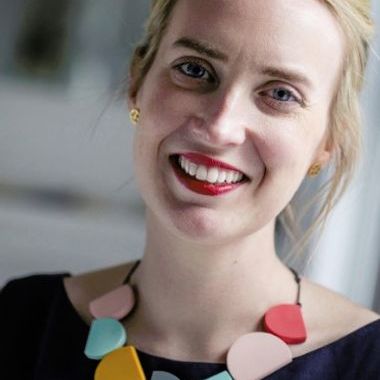
Alice Chilver is the Founder and CEO of WHEN Equality. Its award-winning 100 Black Women Professors Now programme has delivered a step change in gender and racial equity across UK higher education by turning intent into action.
Operating nationally as an organisational change leader and leadership development specialist, Alice works with institutions, governing bodies, and senior leaders to redesign career pathways, promotion systems, and leadership pipelines. Her work combines best-in-class private-sector leadership development with deep expertise in the structural realities of higher education.
Alice previously led people and organisational development at the University of Oxford and University College London. She leads a growing team at WHEN and was named Business Leader of the Year in 2025 for her values-led, high-rigour approach to systemic change.
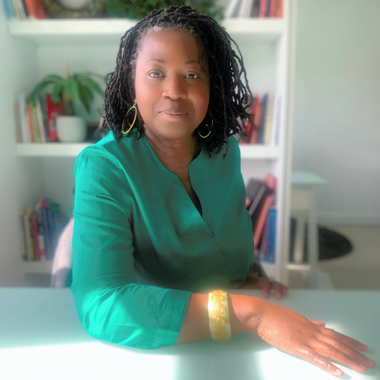
Lisa-Dionne Morris (LDM) is Professor of Public and Industry Understanding of Capability-Driven Design, Director of Internationalisation, and a member of the Institute of Design Robotics & Optimisation within the School of Mechanical Engineering at the University of Leeds, UK. She is also Founder and CEO of BFAN-CIC, a Community Interest Company dedicated to empowering Black female academics and professional services staff in higher education.
Operating globally as a Strategic Design Engineer and Systems Design Executive Consultant, LDM provides academic leadership, consultancy, and learning and development services across user- and capability-driven design, assistive technologies, and product, service, and systems innovation. She holds seven international visiting professorships and is widely recognised for her leadership and impact in STEM, design engineering, and social innovation.
Her accolades include the Sir John Sorrell Design Engineering Award, the Ruth Drew Award for Women Industrial Design Engineers, the 2024 PRECIOUS Award for Outstanding Woman in STEM, and the UK Community Leadership & Empowerment – Strategic Excellence Award. She is also recognised as one of the 100 Black Women to Make a Mark in the UK in 200 Years.
LDM’s research focuses on capability-driven systems design, frugal innovation, cognition, and organisational security. She developed the Capability Plus model, a non-deficit, inclusive framework that integrates human and business capability to design equitable, high-impact solutions for marginalised and underserved communities.