A research study presented at MLS Future Forum has revealed that clove essential oil could offer potential as a sustainable alternative to conventional antimicrobials.
Hypoxia - or low oxygen levels in bodily tissues - was thought to have a protective effect on cells affected by acute myeloid leukaemia, but a new piece of research presented at MLS Future Forum suggests that the picture isn’t quite so straightforward.
Hospital superbugs that cause sepsis and meningitis could be hitching a ride on mobile phones, allowing them to escape out of healthcare settings and into the community, according to research presented at MLS Future Forum earlier this year.
Leading disability & LGBTQIA+ advocate Max Fisher, a Senior Research Associate at ViaNautis Bio, opens up on their STEM journey - and how it led them to MLSFF.
New research shared at the Minoritised Life Scientists Future Forum has uncovered a prostaglandin E2 (PGE2) connection that could offer new targets to help with managing inflammation-driven colorectal cancer (CRC).
They may be more familiar as a room scent but a new study presented at the Minoritised Life Scientists Future Forum reveals that lavender and lemongrass essential oils are effective against thrush, even at low levels.
Lemongrass essential oil can be even more effective than traditional antibiotics against some Streptococcus bacteria under certain conditions, new research to be presented at MLSFF26 has found.
A key player in MLSFF, Nicolas Farmer marks International Day of LGBTQIA+ People In STEM day by opening up on his journey in STEM as a Black and queer person - and reveals why finding community is vital.
Lozenges supplemented with liquorice root extract could be an effective remedy against upper respiratory tract infections while protecting microbes that are beneficial to the body, reveals a study presented at MLS Future Forum.
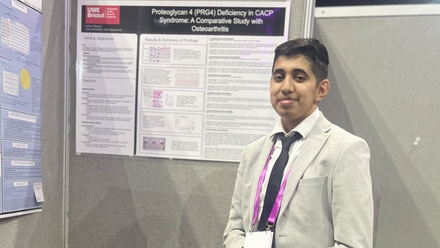
An investigation into a protein that helps to lubricate human joints could help to open up new avenues for treating a rare genetic musculoskeletal condition that has no current treatment. A poster presented at MLS Future Forum illuminated the important role of lubricin in patients with Camptodactyly-Arthropathy-Coxa Vara-Pericarditis (CACP).
Tchissola Goncalves volunteered at the first MLSFF as a sixth former - and is back for more as a first-year Biomedical Engineering student. She tells us why.
Sci-health tech studio Kewoya chose MLSFF25 to showcase its immersive technologies and found it delivered honest feedback, real users, and momentum. Now the team are heading to MLSFF26 in Edinburgh, as director Tughu Aiyewa reveals in a fascinating Q&A.
A chemical found in mushrooms can be teamed with bacteriophages to deliver a one-two punch to antibiotic-resistant infections, reveals a study presented at MLS Future Forum 2025.
A rare cancer that affects children could potentially be treated with drugs that limit the expression of a cancer-linked gene, according to new research that will be showcased at MLS Future Forum later this month.
A new study presented at MLS Future Forum 2025 has uncovered the secrets of a particular strain of the bacterium Klebsiella pneumoniae, revealing a potentially deadly genetic capacity for both antimicrobial resistance and virulence.
A student who exhibited at MLS Future Forum 2025 has developed a low-cost, EMG-controlled smart knee exoskeleton designed to deliver autonomous, real-time rehabilitation and motion assistance for patients with knee-related mobility issues.
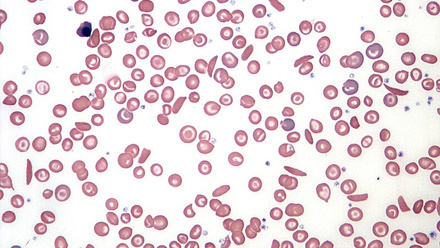
A new study has found significant gaps in how hospitals in the UK comply with clinical guidelines when managing pain in children suffering from a complication linked to sickle cell anaemia. It will be presented at the Minoritised Life Scientists Future Forum this spring.
A new meta-analysis showcased at MLSFF suggests that oral anticoagulants apixaban and rivaroxaban show similar effectiveness in stroke prevention, but apixaban shows a 32% reduction in major bleeding compared to rivaroxaban.
Vitamin D supplements are often recommended to patients with chronic kidney disease, but a new study presented at MLS Future Forum suggests it could be a waste of time.
New research to be presented at MLSFF26 reveals whole-genome sequencing as a powerful tool that can distinguish between antibiotic-resistant and susceptible strains of urinary tract pathogens by identifying the specific genetic signatures that confer resistance.